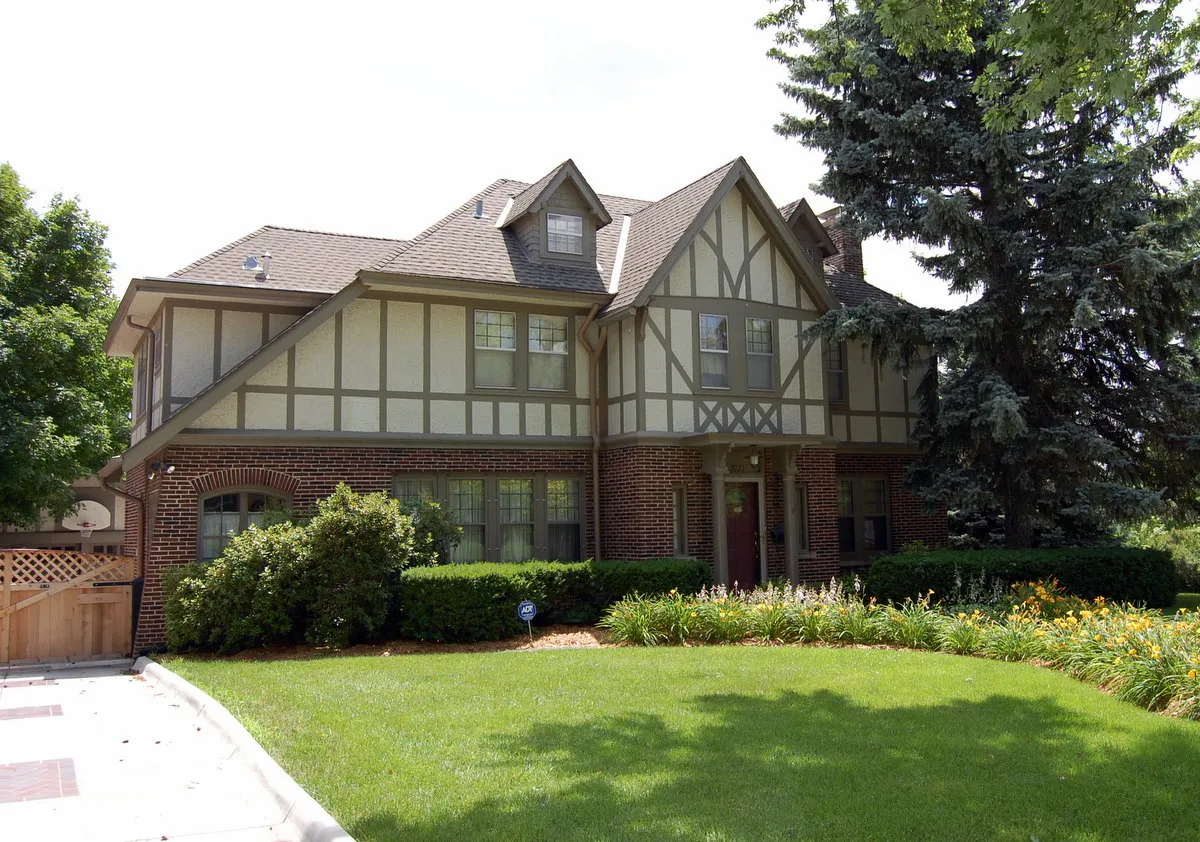

Nebraska’s main property tax break for individual homeowners is the homestead exemption. For those who qualify, it reduces the taxable value of the home, sometimes to zero, and the State of Nebraska pays the exempted tax to the county [1]. It’s for homeowners 65 and older, people with certain disabilities, and certain veterans and surviving spouses [1]. You apply on Form 458 with your county assessor between February 2 and June 30 each year [1].
At a glance
- Filing window
- February 2 to June 30, with the county assessor [1]
- 65+, single: 100% relief
- Household income up to $37,000 [2]
- 65+, married or closely related: 100% relief
- Up to $43,400 [2]
- Disabled, single / married: 100% relief
- Up to $41,600 / $47,700 [2]
- 100% disabled veterans (4V)
- No income or home value limit [1]
Who qualifies
Everyone who applies has to own and occupy the home from January 1 through August 15 of the application year [1]. A homestead means the residence or mobile home and up to one acre of surrounding land [1]. A home held only in the name of a corporation, partnership or LLC doesn’t qualify [1].
Then you need to fit one of the Department of Revenue’s categories [1]:
| Category | Who | Income and value limits? | Schedule I income form? |
|---|---|---|---|
| 1 | Age 65 or older before January 1 | Yes | Yes, every year |
| 2 | Veterans totally disabled by a non-service-connected accident or illness | Yes | Yes, every year |
| 3 | Qualified individuals with a permanent physical disability | Yes | Yes, every year |
| 4V | Veterans with a 100% permanent service-connected disability or a 100% individual unemployability rating | No | No |
| 4S | Certain surviving spouses of qualified veterans | No | No |
| 5 | Paraplegic or multiple amputee veterans whose home the VA substantially paid for, and their surviving spouses | No | No |
| 6 | Qualified individuals with a developmental disability | Yes | Yes, every year |
| 7 | Veterans with a 100% service-connected temporary disability, and their surviving spouses | No | No |
What counts as a qualifying disability
For Category 3, the disability has to be one of these: a permanent physical disability with loss of all mobility so you can’t get around without a mechanical aid like braces, crutches, a cane, walker or wheelchair, or a prosthetic device; amputation of both arms above the elbow; or a permanent partial disability of both arms over 75% [1]. Qualifying for Social Security disability doesn’t automatically qualify you [1].
Veterans
To count as a veteran for these categories, you must have served on active duty during one of the listed periods, from World War II through the Global War on Terror (September 14, 2001, to September 11, 2021), with an honorable discharge or a general discharge under honorable conditions [1].
The 2026 income limits
Categories 1, 2, 3 and 6 are means-tested. Your household income decides how much of the exemption you get, on a sliding scale from 100% down to 0% [1][2]. For 2026 applications, income is based on 2025 income [2].
| Relief | 65+, single | 65+, married or closely related | Disabled, single | Disabled, married or closely related |
|---|---|---|---|---|
| 100% | $0 to $37,000.99 | $0 to $43,400.99 | $0 to $41,600.99 | $0 to $47,700.99 |
| 70% | $40,801 to $42,700.99 | $48,101 to $50,400.99 | $45,501 to $47,400.99 | $52,401 to $54,700.99 |
| 50% | $44,701 to $46,600.99 | $52,801 to $55,100.99 | $49,301 to $51,300.99 | $57,001 to $59,400.99 |
| 30% | $48,501 to $50,400.99 | $57,501 to $59,800.99 | $53,201 to $55,100.99 | $61,701 to $64,100.99 |
| 10% | $52,401 to $54,300.99 | $62,101 to $64,500.99 | $57,001 to $59,000.99 | $66,401 to $68,700.99 |
| 0% | $54,301 and over | $64,501 and over | $59,001 and over | $68,701 and over |
“Household income” is more than your adjusted gross income. It adds Social Security and railroad retirement income that wasn’t taxed, certain Nebraska adjustments, and interest from Nebraska government bonds, for you, your spouse and any other owner who lives in the home [1]. Social Security retirement income counts whether or not you file a tax return [1]. You can subtract out-of-pocket medical and dental expenses above 4% of household income, including health insurance premiums you pay yourself (not employer plans), care from licensed providers, and prescription drugs [1].
The home value limit
For the same means-tested categories, there’s also a cap tied to your county’s average home value. If your home is worth more than the county’s maximum value, your exemption is cut by 10% for every $2,500 over it, and a home that’s $20,000 or more over gets no exemption [1]. The Department of Revenue publishes the limits for every county each September [1][7].
| County | Maximum exempt value, 65+ | Maximum exempt value, disability | Maximum home value, 65+ | Maximum home value, disability |
|---|---|---|---|---|
| Douglas (Omaha) | $302,282 | $362,739 | $604,564 | $680,135 |
| Lancaster (Lincoln) | $333,050 | $399,660 | $666,100 | $749,363 |
| Sarpy | $344,147 | $412,977 | $688,294 | $774,331 |
How to apply
- Get Form 458. County assessors mail preprinted applications in February to people who applied the year before. New applicants can get the form from the assessor or the Department of Revenue [1][4].
- Add Form 458 Schedule I (Income Statement) if you’re in Category 1, 2, 3 or 6 [1][3].
- Add disability proof if needed: Form 458B, signed by a qualified medical practitioner, or a VA certification, depending on your category. Most categories need it the first year and in years ending in 0 or 5, or when the assessor asks [1][3].
- File with your county assessor after February 1 and on or before June 30 [1].
Category 4V veterans don’t have to refile every year. They file Form 458 and a VA certification the first time and in years ending in 0 or 5, or after a change in status [1][3].
Filing late
Nebraska allows a late application in only three situations [1]:
- County board extension: ask your county board in writing, and it can extend your deadline to July 20. You can’t get this two years in a row.
- A spouse’s death during the application year: file by June 30 of the next year with a copy of the death certificate.
- A medical condition that kept you from filing: file by June 30 of the next year with Form 458L, signed by a licensed medical practitioner.
If you have an approved federal tax extension, Schedule I can come later, by the October 15 extension date, but Form 458 itself still has to be in by June 30 [1].
After you apply
The Department of Revenue sends partial approval or denial letters based on income in mid-October, and the exemption shows on the property tax statement county treasurers send in December [1]. If the county rejects your application, you can appeal to the county board of equalization within 30 days; if the Tax Commissioner denies it, you can file a petition for redetermination with the Department within 30 days [1].
Moving? If you filed on time and buy a new home before August 15, file Form 458T with the assessor in the new home’s county by August 15 [1].
Two credits every property owner gets
Separately from the homestead exemption, Nebraska funds two property tax credits, the Real Property Tax Credit and the School District Property Tax Relief Credit. Both directly decrease property taxes, and the state pays for them [5]. Ask your county treasurer how they appear on your statement.
On your state income tax return, you may also be able to claim a refundable credit for community college property taxes you paid, using Form PTC [6].
Where to get help
- Your county assessor handles homestead applications.
- Nebraska Homestead Helpline: (888) 475-5101 [4].
Sources
- Nebraska Department of Revenue, Nebraska Homestead Exemption Information Guide (February 2026)
- Nebraska Department of Revenue, 2026 Household Income Table
- Nebraska Department of Revenue, 2026 Homestead Category Requirement Table
- Nebraska Department of Revenue, Homestead Exemption (forms and helpline)
- Nebraska Department of Revenue, Property Assessment Division: Property Tax Credit
- Nebraska Department of Revenue, Nebraska Property Tax Credits (community college credit, Form PTC)
- Nebraska Department of Revenue, 2026 Average Residential Value
Next steps
BestNebraska has a business relationship with these companies, and we may earn money if you use them. How we make money
Credit repair company
Credit Saint
If an old debt or another item on your credit report looks wrong, Credit Saint can help you challenge it with the credit bureaus.
You can also dispute errors yourself, for free, with Equifax, Experian and TransUnion. No company can legally remove accurate, timely information, and results vary.
Learn about Credit Saint →Free financial app
Bolster
Bolster is a free app for keeping an eye on your credit and building credit history over time.
Check the app's terms for any optional paid features.
See Bolster →Credit monitoring and credit builder
Credit Squad
Credit Squad watches your credit and identity and alerts you to changes. Its credit builder, included with every plan, reports your monthly payment to all three credit bureaus as an on-time installment payment.
Paid monthly subscription; see Credit Squad's site for current plans and terms. Credit building depends on on-time payments, and results vary.
See Credit Squad →Common questions
Who qualifies for the homestead exemption in Nebraska?
Homeowners who own and live in their home from January 1 through August 15 and fit one of the Department of Revenue's categories: age 65 or older, certain veterans and people with physical or developmental disabilities, veterans with a 100% service-connected disability or individual unemployability rating, and certain surviving spouses of veterans. Income and home value limits apply to the 65+ and most disability categories.
What is the income limit for the Nebraska homestead exemption in 2026?
For applicants 65 and older, 100% relief goes to household incomes up to $37,000 (single) or $43,400 (married or closely related), and partial relief phases out at $54,300 and $64,500. For disabled veterans and disabled individuals the 100% limits are $41,600 and $47,700, phasing out at $59,000 and $68,700. Income is from 2025 sources.
When is the deadline to file Form 458 in Nebraska?
File with your county assessor after February 1 and on or before June 30. A county board can extend the deadline to July 20 if you ask in writing, and there are limited late-filing options after a spouse's death or a medical condition.
Do 100% disabled veterans have an income limit for the Nebraska homestead exemption?
No. Category 4V veterans, with a 100% permanent service-connected disability or a 100% individual unemployability rating, have no income or home value limit. They file Form 458 with a VA certification the first year and in years ending in 0 or 5.